Voices From the Fire
Elder-guided, protocol-led, and community-owned.
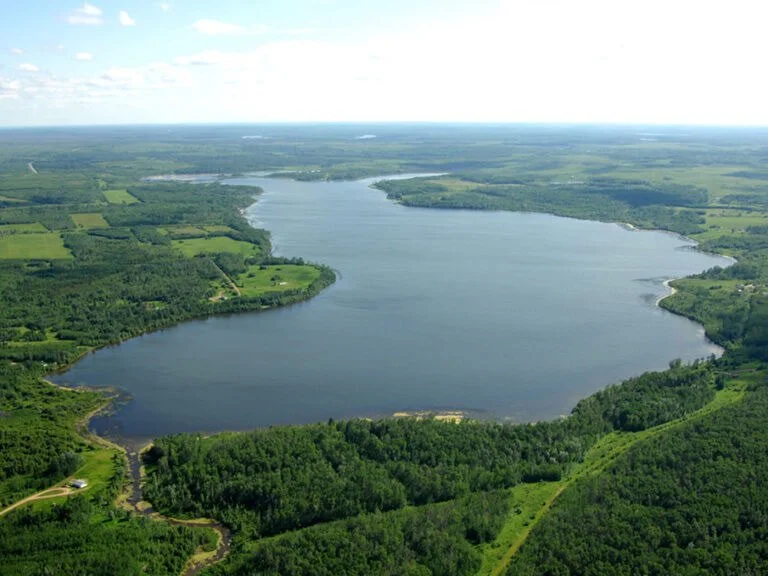
When I was 11, we went to visit my Uncle Joe, and I remember thinking, what is he doing? This was on Buffalo Lake Metis Settlement, where I grew up, and he lived about twelve power poles away from my parents.
That’s how we measured distance as kids. Not minutes. Not kilometres. Power poles. We’d be outside playing and yelling down the road like it was totally normal: “I’m five power poles away!
So, Uncle Joe being twelve power poles away meant he was basically next door. Close enough that you’d think I’d know what he was doing.
He was out by his place lighting his lawn on fire, and I remember thinking, “oh no… his lawn mower must be broken.” I genuinely felt sorry for him. I’m pretty sure I even offered to bring my dad’s mower over and cut his grass for him.
He just looked at me and laughed.
A few days later, we came back and his yard was unreal. Thick, bright, healthy green. And I’m standing there confused because in my head, fire equals “you wrecked it.” But Uncle Joe wasn’t wrecking anything. He was doing what our people have always done. He was clearing out the dry grass and dead brush that catches fast and turns into trouble, and he was protecting his home at the same time. Little did I know, that was my introduction to cultural burning.
That’s why this work matters to me now.
Voices From the Fire is a Buffalo Lake Metis Settlement project led by the Buffalo Lake Elders, focused on bringing our fire teachings back into practice.
I wasn’t brought in to direct anything. I was invited to listen.
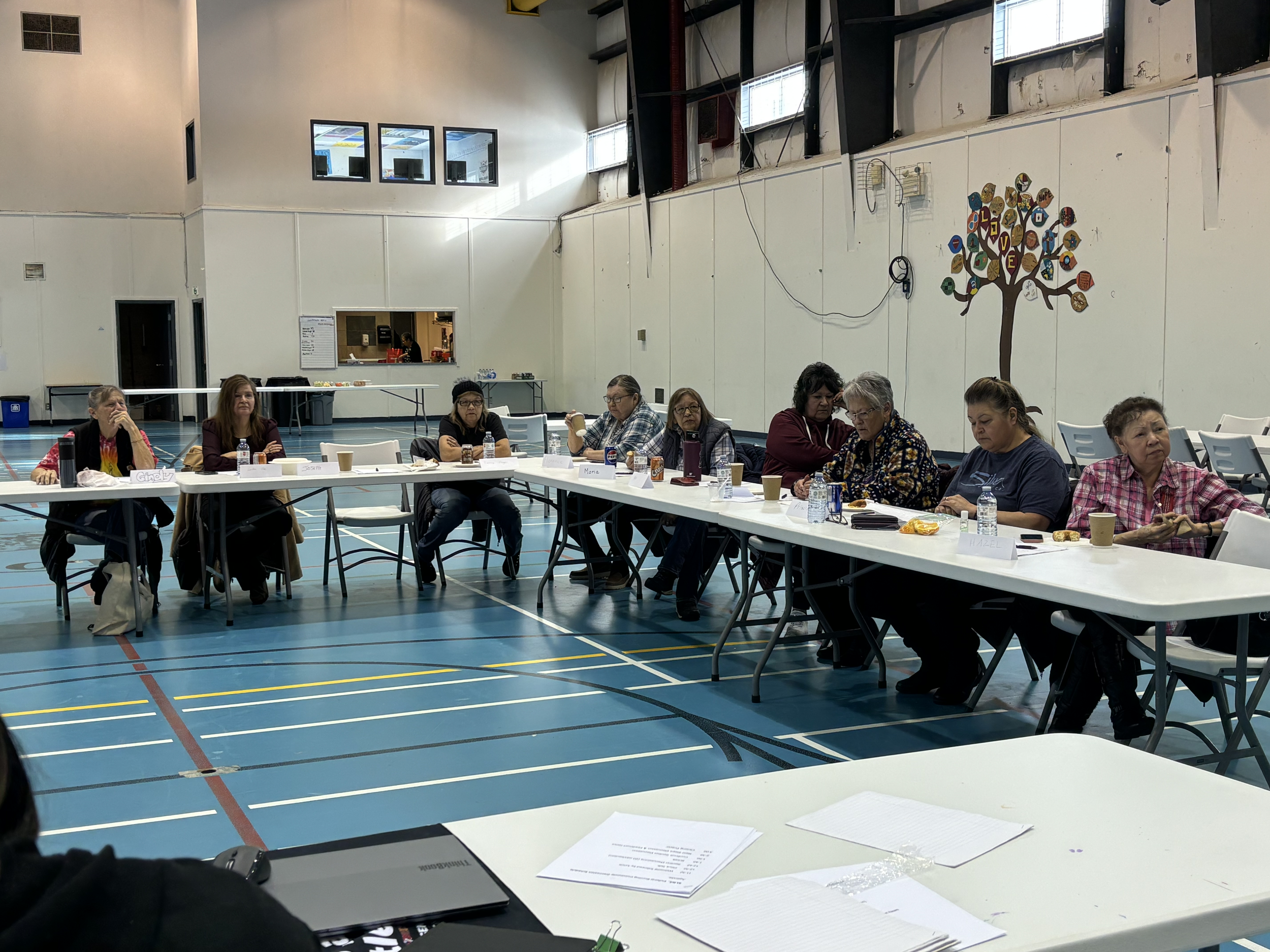
Day one was February 25, 2026, at the Buffalo Lake Community Hall. Elders gathered, including my own mother, to share what they know, what they remember, and what they’ve carried for a long time. Real teachings. Real responsibility. The parts of fire you won’t find in a policy document, but that have kept our people safe on the land for generations.
There’s a reason our people have always gathered around fire. Fire is warmth and food. It’s stories, laughter, and quiet teaching. It’s also about safety, governance, and responsibility. Fire is our relative and it’s someone you need to respect.
That’s what Voices From the Fire is about. Not collecting information. Not extracting Knowledge. Bringing our teachings forward in a way they were meant to be carried.
Where we are, and who we are
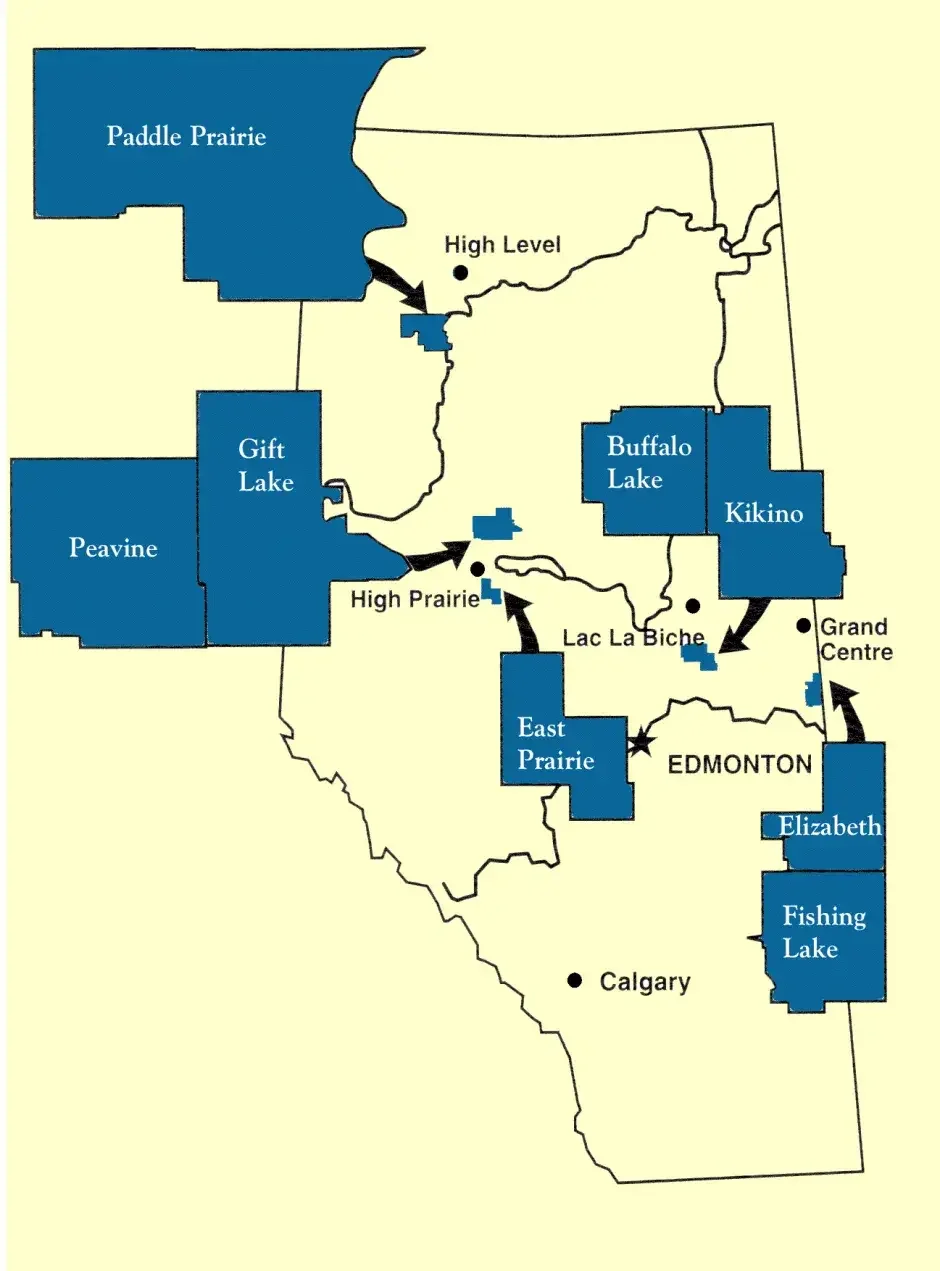
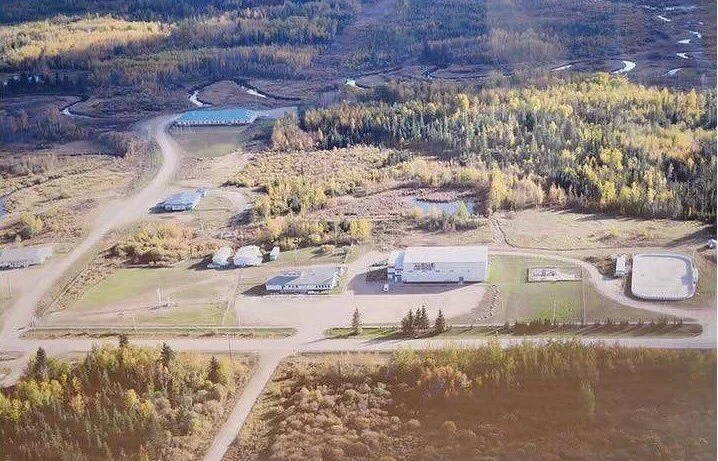
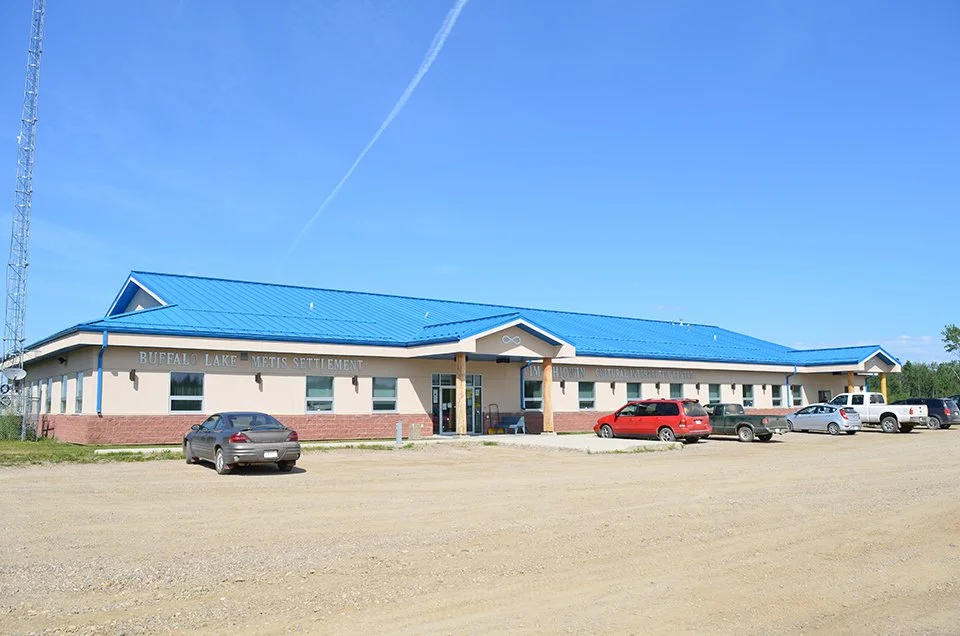
Buffalo Lake Metis Settlement is one of Alberta’s eight Metis Settlements, located in east-central and northeast Alberta, roughly between the Lac La Biche region and the Smoky Lake and Boyle area. We’re carried by a few dozen interconnected families, many of us descendants of Metis Resistance fighters and Metis war vets. Historically, Buffalo Lake is connected to the Beaver River Metis Colony system, often referenced alongside Kikino, and our governance and land base have grown through community-led planning and infrastructure over generations. Our community population is around 1,600 when we’re counting our people the way we know ourselves, not just what shows up in outside reporting.
Voices From the Fire is a collaboration that includes Buffalo Lake Metis Settlement Council, emergency management staff (including our volunteer fire department), Caslan School, the Buffalo Lake Metis Settlement Elders Society, health department staff, and harvesting and consultation staff.
Why we are doing this now
Across our region, wildfires are getting bigger, faster, and harder to predict. Many of our neighbouring communities have experienced evacuation, loss of land based sites, and deep emotional and cultural impacts.
At the same time, colonial systems of fire management have often pushed Indigenous Knowledge to the side. For generations, policies focused on suppression and control instead of relationship and responsibility. In places like so-called British Columbia, cultural burning was restricted and criminalized for a long time. When you cut people off from their stewardship practices, you do not remove fire from the land. You remove the good fire, and you leave the fuel to build, season after season. Then when fire comes, it comes harder.
Buffalo Lake is rich in Knowledge, language, and memory, but living teachings can be lost when there are fewer opportunities for intergenerational gatherings. Our youth and young adults deserve the stories that connect them to the land, and the responsibilities our families carried.
So we are creating those opportunities on purpose.
What Voices From the Fire will do
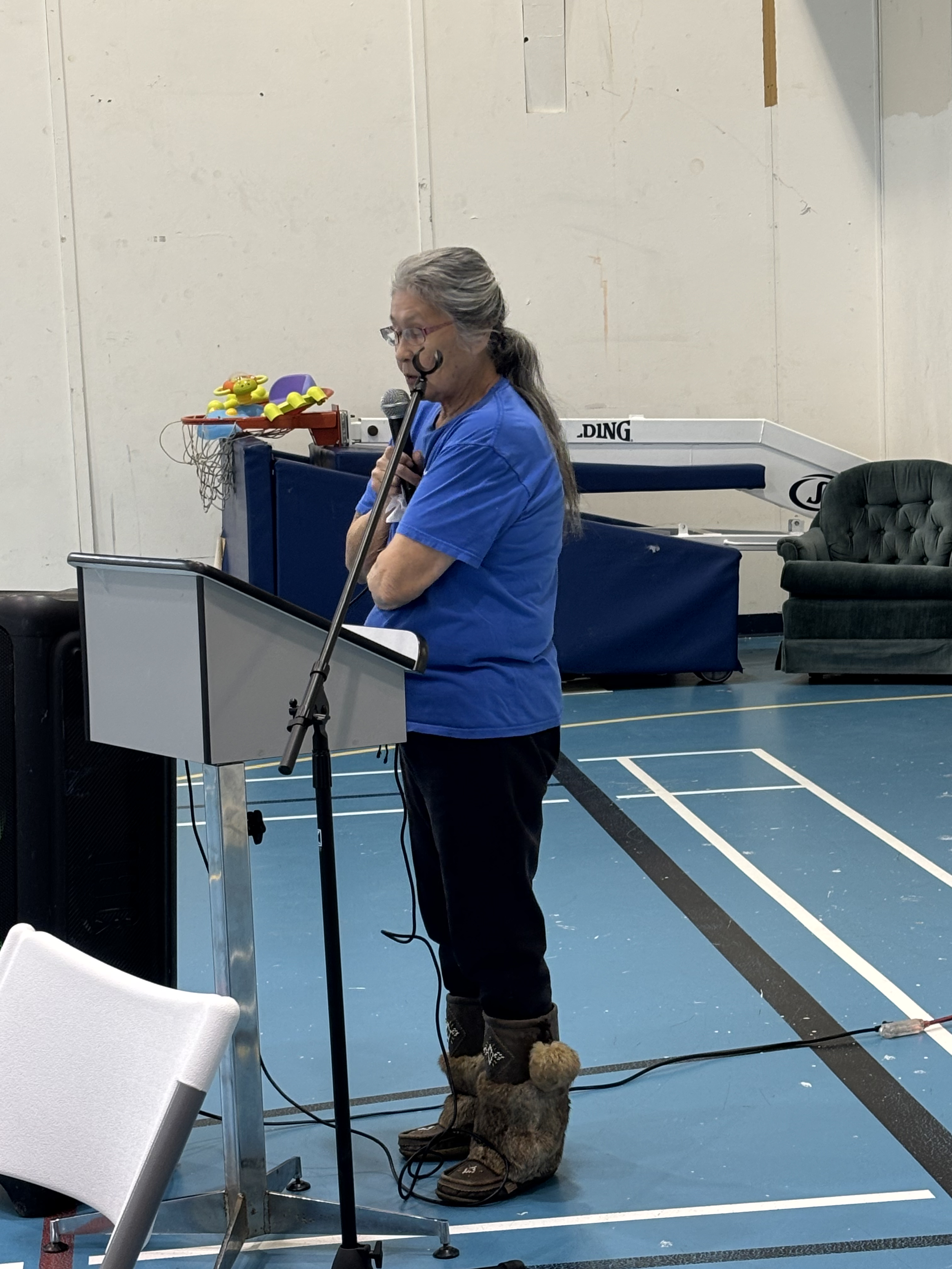
This initiative will host winter, land based storytelling gatherings led by Elders, Knowledge Keepers, youth, and fire professionals.
These gatherings are designed to do a few things at once:
Strengthen community readiness and safety through culturally grounded fire awareness and preparedness
Share knowledge across generations and regions so teachings about land, fire, and resilience keep moving forward
Build relationships between communities and partners, including local emergency response and fire services, schools, and neighbouring Nations
Co create a community owned Fire Story Bundle that protects knowledge sovereignty while making teachings accessible for future generations
Each gathering will take place on the land, following local protocols and incorporating ceremony, food, and land based teachings. Story gathering will center on:
Cultural burning practices and what good fire does for berry patches, medicines, animal habitat, and land health
Fire as relationship, not just a hazard, but a relative that connects people, land, spirit, and responsibility
Community fire safety, preparing homes, gathering spaces, and natural areas using both cultural and contemporary tools
Identifying community and family member roles and responsibilities in the practice of cultural burning
Lessons from lived experience, stories of past wildfires, response, recovery, and collective strength
Gathering, not extracting
This story gathering methodology is centered on listening, reciprocity, and relational accountability. In practice it looks like this:
Each gathering opens and closes in a good way with prayer, offering, and acknowledgement of land and ancestors
Teachings are shared with care, and with mental health and wellness support available when difficult wildfire stories come forward
Youth are involved not as assistants, but as apprentices and future carriers of this knowledge
Storytellers have control over how their stories are used
No story goes into the final bundle without approval
Elders have authority over what cannot be shared forward
This is not a one time consent situation. This is ongoing consent, ongoing relationship.
Knowledge protection and shared ownership
The Story Bundle is not “open source.” It is community owned, guided by Elders, and held through our governing bodies. Copyright stays in the community.
This matters. Too many communities have seen their knowledge taken, translated, packaged, and sold back to them.
This project is built on community sovereignty over knowledge, and on principles like OCAP and CARE. In plain language, it means the community owns it, controls it, accesses it through protocol, and decides what goes forward.
What the final Story Bundle will include
By April 2026, the outcome will be a collective Fire Story Bundle, a living, community owned digital and physical resource, and it will include:
Digital stories tied to a story map with recorded teachings and map images
A photo journal from the winter gatherings
A land based teaching kit linking stories to seasons, places, and practices
It is designed to be used, not just archived. Used for school based learning, land camps, community programming, and fire stewardship planning for years to come.
Why this should inspire other Indigenous communities
If you are reading this from another community, I want to say this clearly.
You do not need to wait for a disaster to start documenting your teachings.
You do not need to wait until your Elders are exhausted, or until youth are disconnected, or until wildfire season forces the conversation.
You can create the circle now.
Start small if you have to. Host a story circle. Put protocols in place. Decide what stays in community. Decide what can be shared. Train youth to document with permission. Build a bundle that your own schools and families can access in the future.
Because every time we protect a teaching, we protect a future decision. Every time we put a story in the right hands, we strengthen how our people respond and plan.
Returning to the fire
Two Elders said it best:
“Fire, it wasn’t traditional, it was a way of life.”
“I do love it here. It is the best place. We must do our part to protect it.”
That is the heart of this work.
Voices From the Fire is about rebuilding relationship with fire as a relative, and protector.
We’re revisiting our fire teachings and stepping back into our roles and responsibilities as land stewards. Not just to “manage risk,” but to protect what we love.
We also need to be honest about why this matters. Good fire won’t erase wildfire season overnight, but it can change what’s possible. When we bring cultural burning back, we reduce what firefighters call “fuel”, the dry grass, dead brush, and built-up debris that acts like kindling and makes fires explode.
Cultural burning can create safer fire breaks, protect key areas, and support healthier land. This is part of how we stop watching devastating fire seasons grow year after year.
As a kid, twelve power poles away meant close enough to walk to. Close enough to be part of what was happening. Close enough to ask questions, to help, and to learn without even realizing it. Our teachings are still like that. Still within reach. Still carried through family and community, through paying attention, participating, and helping where we can. You do not have to go far to find them.
Astum! (COME) This is an invitation.
An invitation to other Indigenous communities to do the same in their own way. Every Nation is different. Every territory has its own laws, medicines, stories, and protocols. But the root is the same: LAND BACK is also land stewardship. It’s remembering what our responsibilities are, and choosing to carry them forward.
Chamadas para ação
1) Host one fire story circle this season. Pick a date. Invite a few Elders and a few youth. Keep it small. Feed people. Start with stories about how your community has lived with fire and what’s changed.
2) Make a one page “what stays private” agreement. Before anything is recorded, decide together: what can be shared, what stays in community, and what is never written down. Keep consent ongoing.
3) Create a community fire memory map. Print a map and mark 5 places that matter: berry patches, trails, old burn areas, gathering spots. Add notes from Elders about what those places need.
4) Build a simple Story Bundle folder. Start a shared folder held by your community (Band office, Elders group, school). Save notes, photos, audio only when permitted, and a short “teachings summary” after each gathering. That’s your bundle starting.
To learn more about Buffalo Lake Metis Settlement, visit their website. To learn more about Voices From the Fire: Story Gathering for Community Wellness, or to support this work.
contact: Lyle Desjarlias at the Buffalo Lake Métis Settlement Administration Office. 780-689-2170
About the author
https://www.indigenousclimateaction.com/people/jamie-bourque